
Many parents face the question: "How do I understand what my child is going through during war or after stressful events?" Understanding a child's emotional state during such times is key to their psychological well-being.
Verbal and non-verbal communication:
Children often cannot put their feelings into words, so it is important to pay attention to non-verbal signals. Watch for changes in behaviour, such as new habits or shifts in normal activity.
Recognising body signals:
Non-verbal signals can include changes in appetite, sleepiness, or excessive activity. It is important not only to notice these changes but also to discuss them calmly with the child.
Talking about feelings:
Share your own experiences with the child. Show them that it is normal to express fear or worry. This will help the child feel more secure and understand that they are not alone with their feelings.
Signs of stress in a child:
Among the typical signs of stress in children are shallow breathing, breath-holding, or movements that are either too sharp or too smooth. It is important to notice these signals and respond to them appropriately.
Exercises for reducing stress:
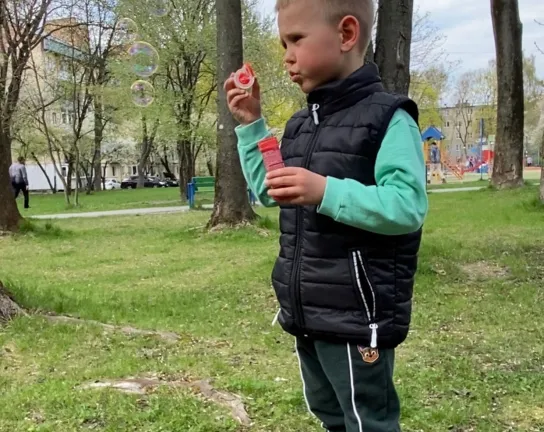
1. Bubble-blowing exercise:
Use soap bubbles to teach the child deep, slow breathing. Show them that creating a large bubble requires a deep inhale and a slow exhale.
2. Bean play:
Invite the child to play with beans, feeling their different textures. This can help the child restore bodily sensitivity and reduce tension.
3. Play with textured objects:
Use objects with different textures, such as ridged rubber toys or brushes, in play activities that encourage physical contact and the restoration of sensitivity.
When to seek help?
If you notice that signs of stress are not diminishing or are even worsening, it is recommended to consult a specialist. Do not hesitate to seek support if you feel you cannot manage the problem on your own.
Understanding and supporting a child during a period of stress requires patience and attentiveness. Open communication, shared exercises, and positive reinforcement can significantly help the child cope with challenges. Remember: you are the most important source of support for your child during this difficult time.
